Home › Services › Youth Fitness Training
Youth Fitness Training in San Jose, CA
Teenagers do not need adult workouts. They need coaching that matches their age, their sport and their growth — and makes training something they actually want to do.
Key Takeaways
- Age-appropriate training — no adult programs scaled down
- Movement quality first: squat, hinge, jump, land, sprint
- Built around school, homework and sport seasons
- Confidence and enjoyment matter as much as strength
What Is Youth Fitness Training?
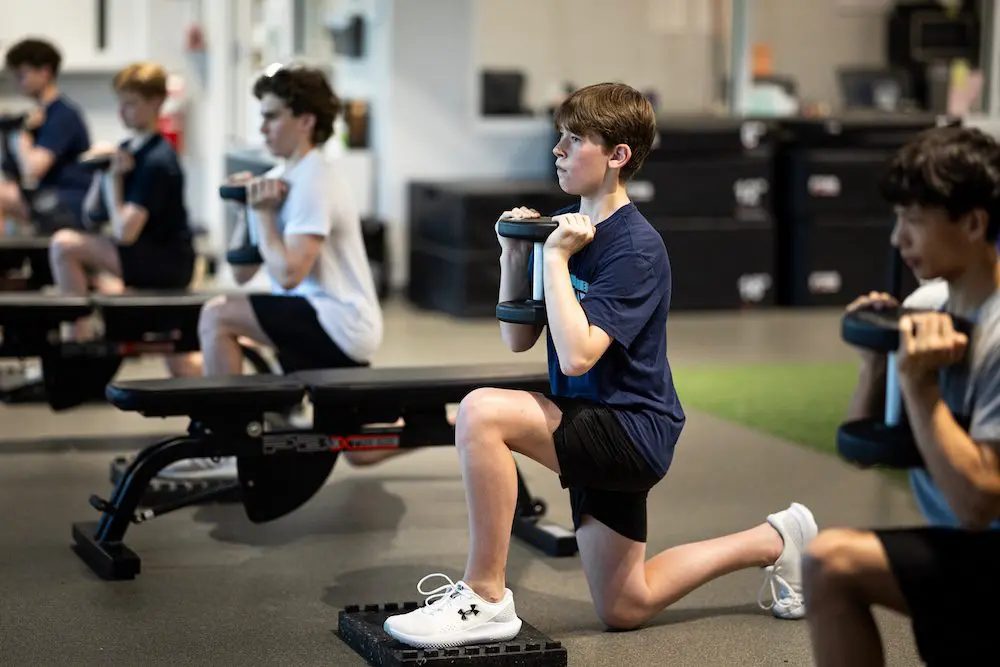
Youth fitness training in San Jose is one-on-one or small-group coaching for teenagers, focused on movement quality, strength, speed and confidence. Sessions are built around the teen's age and stage of growth, their sport if they play one, and their school schedule — with safety and fun ahead of heavy loading.
Teenagers are not small adults, and training them like adults is how injuries and burnout happen. A young athlete's body is still growing, which means growth plates, changing limb lengths and coordination that shifts month to month. A youth coach works with all of that: teaching movement patterns, building general strength, and keeping the load appropriate for the age.
The other half of youth training has nothing to do with exercise. Teenagers train when it is fun, when they feel competent, and when the coach respects them. Sessions that feel like punishment do not last. A good youth coach makes the work challenging and enjoyable, explains the why behind each exercise, and gives the teen ownership — choosing goals, tracking progress, and seeing themselves get stronger.
Signs Youth Fitness Training May Help
- Your teen plays a sport and wants to get faster or stronger
- Your teen is inactive and needs a positive way into exercise
- Your teen had an injury and needs to rebuild confidence
- Your teen wants to train but does not know what to do
- Your teen struggles with coordination or confidence in PE
- You want your teen active without the pressure of a team
What Youth Fitness Training Includes
- Movement assessment: squat, hinge, jump, land, sprint, change direction
- Age-appropriate strength work with bodyweight, bands and light weights
- Speed and agility drills for sport
- Balance and coordination work
- Warm-up and recovery habits the teen can use alone
- Progress tracking the teen can see and understand
How Youth Fitness Training Works
Meet
A first session with the teen and a parent: goals, sports, schedule, injuries, and what the teen actually enjoys. The teen's goals lead, not the parent's.
Move
The coach watches how the teen moves — squat, jump, land, sprint — and finds the starting point. No heavy lifting until the movement is solid.
Build
Sessions build strength, speed and coordination in small steps, with variety to keep it interesting and progress the teen can track.
Support
The plan adapts to school and sport seasons: lighter during exams and playoffs, more during the off-season. The coach stays in touch with parents about progress.
Youth Training Formats
| Format | How it works | Good for |
|---|---|---|
| One-on-one | Private coaching for one teen | Full attention and a plan built for one athlete |
| Small group | Two to four teens training together | Friends, siblings, or teammates who push each other |
| Sport-specific | Training built around one sport | Soccer, basketball, volleyball, track and more |
| Off-season | A block of training between seasons | Building strength and speed when games stop |
Common Mistakes in Youth Training
- Copying adult programs: heavy barbell work before the teen can move well is how injuries happen.
- Specializing too early: year-round single-sport training burns teens out and raises injury risk.
- Skipping warm-ups: teens bounce back fast, so they skip preparation — until something goes wrong.
- Chasing numbers: a heavier squat means nothing if the landing mechanics are poor.
- Ignoring rest: growth, school and sport all demand recovery; more training is not always better.
How to Choose a Youth Fitness Training Trainer in San Jose
When choosing youth training in San Jose, look for a coach who asks about the teen's age, growth, sport and school schedule before talking about workouts. Ask how the coach handles safety, how progress is tracked, and whether parents are kept in the loop. A good youth coach talks to the teen, not just to you — and the teen should leave the first session wanting to come back.
Who Is Youth Fitness Training For?
Youth fitness training suits teenagers from around 11 to 18 — athletes who want an edge in their sport, inactive teens who need a positive start, and teens returning from injury. It also suits teens who do not like team sports but want to be active. Parents are part of the process: goals, schedules and progress are discussed openly, and the teen's own goals always come first.
What Affects the Cost of Youth Fitness Training?
The cost of youth fitness training depends on whether sessions are one-on-one or small-group, how often they happen, and whether training is in-season or off-season. Small-group sessions cost less per teen and work well for friends and teammates. Many families train more during the off-season and less during the school year, which keeps the program affordable across the year.
Youth Fitness Training in San Jose
San Jose is a strong city for youth training. The city runs youth sports leagues through its community centers, and the parks — from Almaden Lake Park to Lake Cunningham Park — give teens space to run, jump and play. Many teen athletes in San Jose play club soccer, basketball or volleyball, and a trainer can build the off-season program around the club schedule. Sessions can happen at a gym, at home, or outdoors, and the plan always fits around school hours.
Related Training Services
Sports Performance Training
The gym is not the sport — but the right training shows up on the field. Speed, power and agility, built around your sport and your season.
Learn more →Strength Training
Strength is a skill. A coach teaches the lifts, watches your form, and adds weight at the right pace — so you get stronger without getting hurt.
Learn more →Small Group Personal Training
Personal training with people you like. Small groups keep the coaching close and the cost down — and training with someone else is the best way to show up.
Learn more →Where We Train
We offer youth fitness training across San Jose and the surrounding communities, including Downtown San Jose, Santa Clara, Milpitas. See all areas we serve in San Jose and Silicon Valley, or explore our full list of personal training services.
Frequently Asked Questions
What age can a teenager start strength training?
Most teens can start light, coached strength work around age 11 or 12, once they can follow instructions and move well. The key is the program: bodyweight and light resistance first, technique before load, and no maximal lifting. A coach who works with teens will start with movement quality and add resistance gradually as the teen grows and the technique holds up.
Is weight training safe for teenagers?
Yes, when it is coached and age-appropriate. Research on youth resistance training is clear: supervised, well-designed programs are safe and build strength, bone density and confidence. What is not safe is unsupervised heavy lifting, adult programs, or maximal attempts. A youth coach keeps loads moderate, watches form on every set, and progresses slowly.
How is youth training different from adult training?
The exercises overlap, but the approach is different. Youth sessions are shorter, more varied, and built around movement quality rather than heavy loading. There is more play, more variety, and more attention to coordination and landing mechanics. The coach also manages growth — a teen who grows three inches in a summer needs the program adjusted, because their balance and leverage just changed.
Can youth training help my teen get better at their sport?
Yes. Strength, speed, jumping and change-of-direction work all transfer to sport — and they reduce injury risk at the same time. A trainer builds the program around the sport: a soccer player needs different work than a volleyball player. The best results come in the off-season, when there is time to build strength without the fatigue of games and practices.
What if my teen does not like sports?
That is fine — youth training is not only for athletes. Many teens train simply to get stronger, feel more confident, and enjoy moving. Sessions can be built around what the teen likes: bodyweight challenges, outdoor workouts, games, or training with a friend. The goal is a teenager who likes exercise, not one who dreads it.
Do parents need to be present at youth sessions?
Parents are welcome, especially at the first session, but they do not need to stay for every workout. Most teens train better with a little space, and the coach keeps parents updated on progress, goals and any concerns. For younger teens, a parent nearby for the first few sessions is normal and encouraged.